Floor Deck Roll Forming Machine: The 5 Step Selection Framework

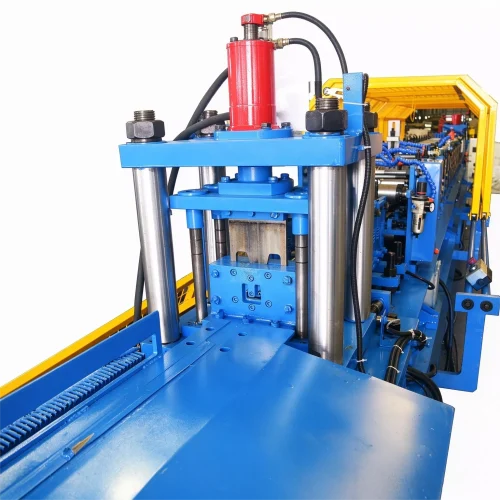
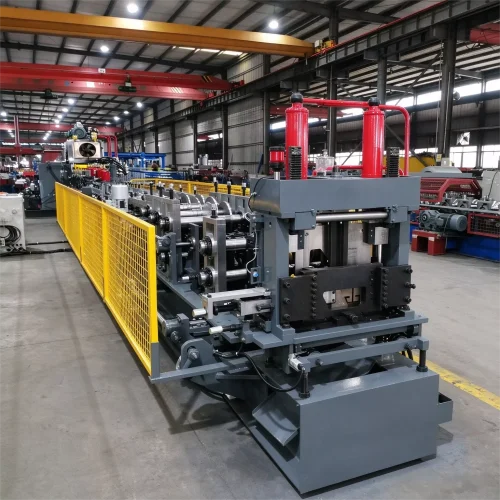
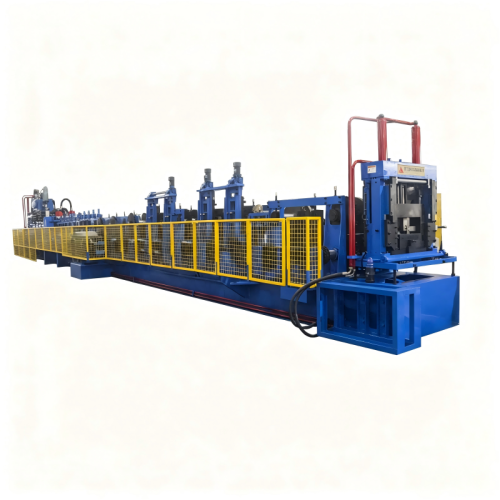
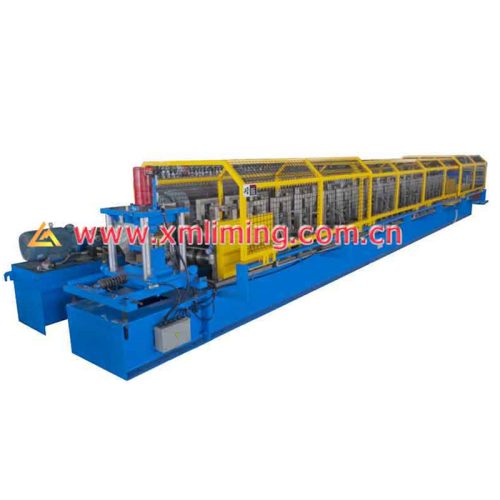
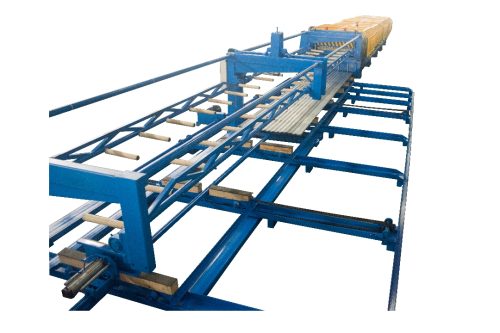
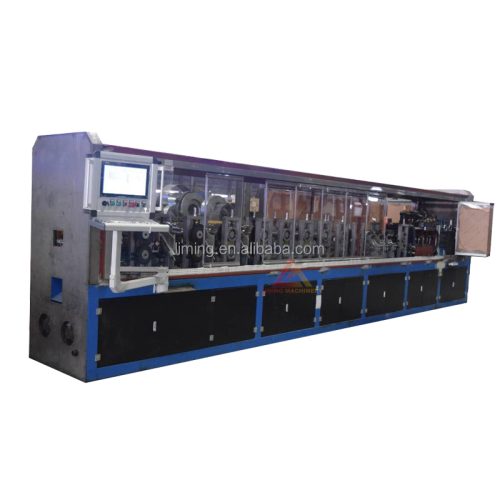
Floor deck roll forming machine line: decoiler, leveler, roll forming mill, hydraulic cut to length, stacking.
Choosing a floor deck roll forming machine comes down to five decisions, and they run in a fixed order because each one locks the next: the deck profile, the gauge range, the pass count and output, compatibility, then the supplier. Settle them in sequence and the configuration is no longer a matter of opinion.
The hub of the six page floor deck guide · Xiamen ZhengLiming Metallurgical Machinery
In short,this page is the index. Read the summary here, then open only the step you are working on. Each guide stands alone — you do not need to read the other four.
Xiamen ZhengLiming Metallurgical Machinery Co., Ltd. has built cold roll forming equipment since 1989 and has supplied floor deck lines for structural steel projects since the 1990s. We design and manufacture in house, with heavy gauge 2.0–3.0 mm floor deck lines already running at overseas job sites. Our product portfolio covers a standard line (0.7–1.5 mm), a heavy gauge line (2.0–3.0 mm), and a combined no pour floor deck (a dry construction deck with no site cast concrete) and C purlin machine.
The five decisions at a glance
| Step | What you settle | What it changes | Full guide |
| 1 | Deck profile: open, closed, re-entrant dovetail, truss bottom plate | Roll tooling, rib geometry, shear setup | Floor deck profile types |
| 2 | Gauge and material grade | Frame tonnage, roll steel, shear type, budget scale | Gauge & material grade guide |
| 3 | Forming passes and line output | Mill length, drive power, daily capacity | Forming passes & line output |
| 4 | Compatibility: one profile, or two product families on one line | Roll-set count, changeover design, footprint | No-pour deck & C purlin combo machine |
| 5 | Site conditions, then supplier verification | Power supply, layout, acceptance criteria | Supplier & site checklist |
What the floor deck roll forming line actually does
A standard floor deck roll forming machine — sold as a floor decking machine, steel deck roll forming machine or metal deck forming line on US drawings — runs in five stages: hydraulic decoiler, entry leveling, guiding and positioning, multi pass roll forming, then hydraulic cut to length with discharge and stacking. Each stage prevents a specific failure, and skipping one shows up later as scrap rather than as a missing feature on the spec sheet.
The decoiler pays off coil under controlled tension. Without tension control,the strip walks sideways, the first pass mis feeds, and every panel after it inherits the error. The leveler removes coil set — the curl a coil takes from being wound. Otherwise,a curved strip forms a twisted rib that no amount of roll pressure will straighten afterwards. Guiding holds the strip on centerline, so the ribs land in the same place on panel one and panel ten thousand.
Roll forming is where the profile is made, and where most of the machine's cost sits. Furthermore,between 22 and 38 pairs of rolls, depending on the gauge tier, bend the strip a little at each stand, so the steel arrives at its final section without being forced there in one bite. Cut to length comes last, and on heavier lines the shear is hydraulic rather than mechanical, because a mechanical shear sized for 1.5 mm will not cleanly cut 3.0 mm.
Why follow this fixed selection order
Buyers who begin with price usually end up re quoting. For this reason,the five steps are ordered by what locks what.
Profile fixes the tooling. The section determines every later number — passes, mill length, shear — so it has to come first.
Gauge fixes the machine class. It sets the budget order of magnitude, which means a price conversation before it is settled is meaningless.
Pass count follows from profile and gauge together, and it fixes mill length and drive power.
Compatibility comes fourth because a second product family adds roll sets and changeover hardware on top of an otherwise settled machine.
Site conditions come last because power is the one constraint you cannot design around. A machine that arrives at a workshop without the capacity does not run.
Four practical rules to avoid overspending
1. State width and gauge in the first line of your inquiry. Under the same floor deck roll forming machine name, configuration can differ by a factor of two.
2. Never compare pass counts across gauge tiers. 38 passes on 0.7–1.5 mm and 22 passes at 2.0–3.0 mm are both correct answers.
3. Ask whether the quoted speed includes punching and cutting. The same machine differs by more than 30% between the two definitions.
4. Do not pay now for a profile you may run in three years. Separate "needed now" from "possibly later"; prepaying for a possibility is the most common waste in this purchase.
Three machine tiers overview
Standard 0.7–1.5 mm covers most industrial, warehouse and commercial slabs. Heavy gauge 2.0–3.0 mm serves heavy duty plants, composite slabs and long span public buildings. A medium gauge combo covers 1.5–3.0 mm while also running C purlins. None of the three spans the others — crossing tiers means two machines, not two roll sets.
The combo overlaps the heavy gauge line at 2.0–3.0 mm, and the overlap is not redundancy. It forms a no-pour deck — laid dry, no site-cast concrete. The heavy gauge line forms a composite deck — it carries load only once concrete is poured on it and shear studs are welded through. Same thickness band, different product family. Therefore, if you only read the gauge range, two machines that never substitute for each other look interchangeable.
The roll materials, tolerances and speed definitions behind that statement are compared in Gauge & Material Guide.
Quick FAQ
Which profile is most common?
Open profile deck. It is the cheapest per square meter and the fastest to install; fire performance is weaker, so projects usually add fireproof coating.
Can one machine run 0.7 mm and 3.0 mm?
Not with one machine. No floor deck roll forming machine spans that range — forming force, frame rigidity, drive and shear are all re engineered rather than re tooled.
How fast can I get a proposal?
Send the profile drawing, gauge range and target daily output. A configuration proposal comes back within 24 hours.
Get your custom configuration proposal
Send three things: the deck section drawing, the gauge range, and the target daily output. You will receive a custom configuration proposal within 24 hours. If the profile is still open, send the construction drawing and we will review it at no cost.
Browse the full selection guides
YX designation decoded, cover widths, composite vs non composite
Three tiers, thickness tolerance, 45# chrome vs Cr12
38 vs 22 passes, two speed definitions, the capacity formula
One line, two product families, full parameters
Site and power check, lead time, what a coil trial proves